Websites are no longer pages you visit — they are experiences you step into.

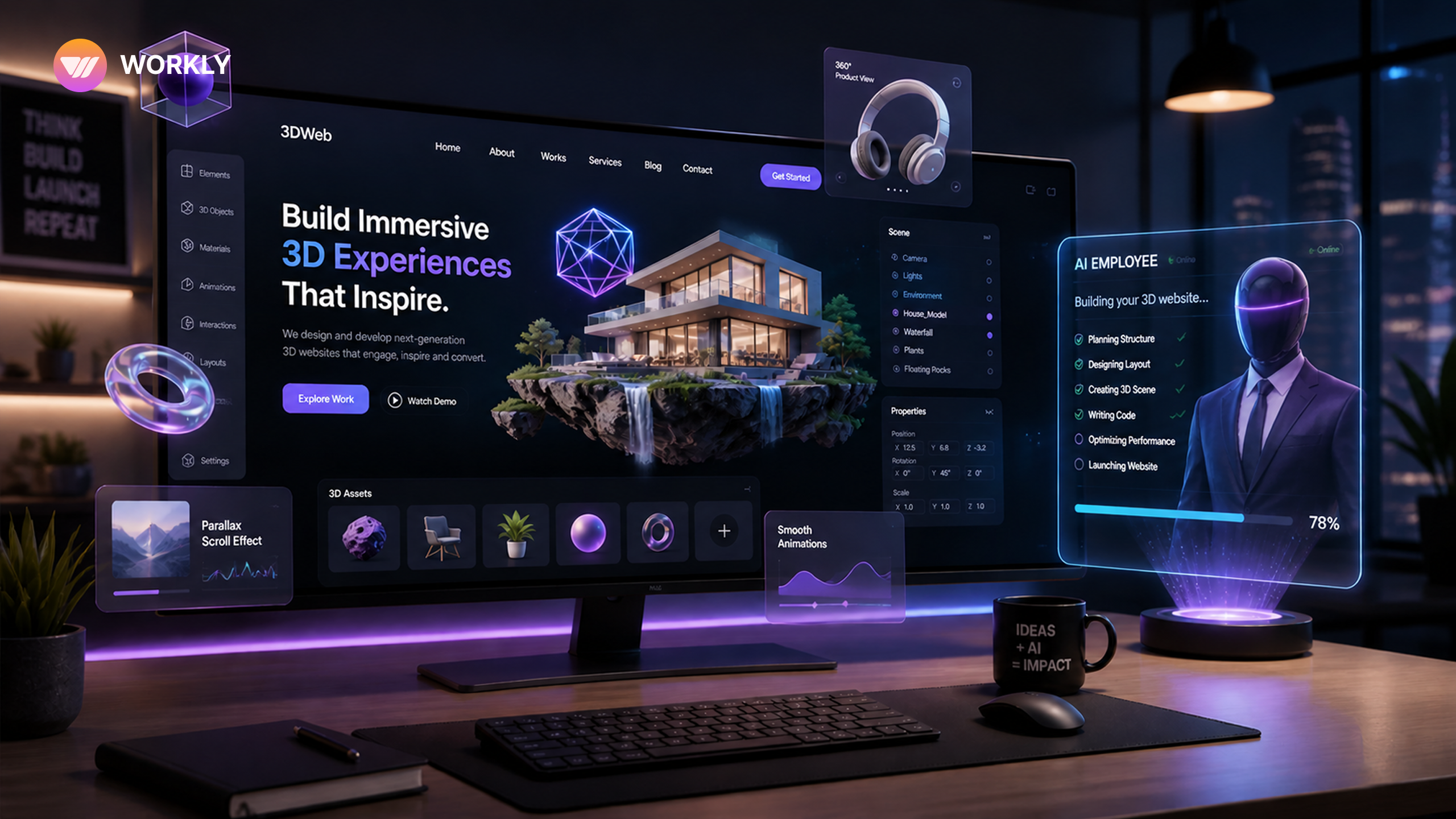
The biggest mistake brands are making right now is assuming the old website model still works. Static pages filled with text, predictable layouts, and basic scrolling behavior are no longer enough to hold attention. Users today are overstimulated, impatient, and constantly comparing experiences across platforms. If your website feels like every other site, it gets ignored within seconds.
This is exactly where 3D websites change the game. They introduce depth, motion, and interaction — turning passive browsing into active exploration. Instead of users just consuming information, they engage with it. They move through your website, interact with elements, and subconsciously spend more time understanding your brand. This shift is powerful because it doesn’t force attention — it earns it.
A 3D website is not just a design upgrade. It’s a complete upgrade in how users perceive your brand. It signals innovation, effort, and modern thinking instantly. And in a crowded digital space, perception alone can determine whether someone stays or leaves.
3D websites built faster with AI execution
AI Employee: The Layer That Eliminates Complexity
For years, building something like a 3D website required coordination between designers, developers, animators, and project managers. Even then, the output often depended on how well everyone understood the vision. Miscommunication, delays, and endless revisions were part of the process.
A Workly’s AI Employee removes that entire layer of complexity.
It doesn’t just assist — it executes. It understands your input, interprets intent, and translates it into structured output across design, development, and experience. You are no longer managing people or explaining things repeatedly. You are simply directing outcomes.
This changes everything because it collapses the gap between idea and execution. What used to take weeks of back-and-forth now happens in a continuous, aligned flow. The AI doesn’t get tired, doesn’t misinterpret context the way teams often do, and doesn’t require multiple iterations to reach clarity.
The result is not just speed — it’s consistency. Every part of your website feels connected because it comes from a single, unified execution system.
Why 3D Websites Drive Real Business Impact
The reason 3D websites are becoming powerful is not because they look good — it’s because they influence behavior.
When a user lands on a 3D website, their interaction pattern changes immediately. They slow down, they explore, and they engage. This increased engagement directly impacts how long they stay, how much they understand, and how likely they are to take action.
From a conversion standpoint, 3D experiences reduce the need for heavy explanation. Instead of describing a product or service, you show it in motion. Instead of convincing users through text, you let them experience it visually. This creates trust faster and makes decision-making easier.
There’s also a strong psychological advantage. People remember experiences far more than information. A well-executed 3D website creates a lasting impression, which increases return visits and brand recall. In competitive industries, this alone can separate you from dozens of similar-looking competitors.
Ultimately, 3D websites are not just about aesthetics — they are about control over attention, perception, and user behavior.
How an AI Employee Builds a 3D Website from Start to Finish
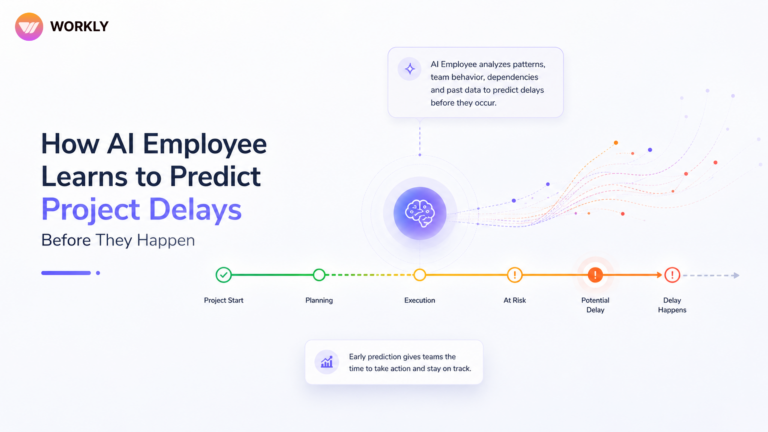
The process of building a 3D website with a Workly’s AI Employee is fundamentally different from traditional workflows because it is linear, fast, and outcome-driven.
It begins with your vision. Instead of creating wireframes or planning documents, you simply describe what you want the type of website, the audience, the tone, and the goal. The AI takes this input and converts it into a structured blueprint that includes layout, interaction ideas, and overall experience flow. This alone removes one of the biggest bottlenecks in website creation: starting from scratch.
From there, the AI builds the architecture of the website. It defines how users will move through the site, where 3D elements will appear, and how each section connects to the next. This ensures that the website is not just visually impressive, but also logically structured and easy to navigate.
The next stage is development, where the AI handles the most complex part — integrating 3D elements. It writes clean, optimized code, adds animations, creates interactive components, and ensures that everything works smoothly across devices. What makes this powerful is that you don’t need to understand any of the underlying technology. You are not debugging or experimenting — you are receiving a working output.
Design is layered on top of this with equal precision. The AI applies modern UI/UX principles, ensuring that colors, typography, spacing, and lighting all support the 3D experience rather than overpower it. This is critical because a poorly designed 3D website can feel overwhelming, while a well-designed one feels intuitive and premium.
Finally, the AI optimizes the entire website for performance. 3D elements can be heavy, but the AI ensures fast loading, smooth rendering, and compatibility across browsers and devices. By the time the website is ready, it is not a rough version — it is a polished, launch-ready product.
The Real Shift: From Effort-Based Work to Execution-Based Output
What makes this entire approach powerful is not just the end result, but how it changes the way work happens.
Traditionally, building something impressive required time, coordination, and specialized skills. Now, those constraints are significantly reduced. The focus shifts from “how to build” to “what to build.”
This is a fundamental change. It means that creativity is no longer limited by technical ability or resources. If you can clearly define your idea, an AI Employee can execute it.
And that’s where the real advantage lies.
Final Thought
A 3D website is not just a trend — it’s a reflection of where digital experiences are heading. And a Workly AI Employee is not just a tool — it’s the system that makes those experiences possible without friction.
The brands that will stand out are not the ones with more resources —
but the ones that move faster from idea to execution.
FAQ’S
Do I need coding skills to build a 3D website using an AI Employee?
No, you don’t. The entire purpose of an AI Employee is to eliminate the technical barrier. You focus on describing your vision — the AI handles coding, structure, and 3D integration. You’re directing, not developing.
Will a 3D website slow down my site performance?
Not if it’s built correctly. An AI Employee optimizes assets, compresses 3D elements, and ensures smooth rendering across devices. The result is a visually rich site that still loads fast and performs well.
Is a 3D website suitable for every business?
Not every business needs heavy 3D, but every business can benefit from some level of interactivity. Industries like real estate, e-commerce, SaaS, and portfolios see the highest impact because visual experience directly influences decisions.
Can Workly reducHow long does it take to build a 3D website with an AI Employee?e dependency on meetings?
What used to take weeks can now take hours or a few days, depending on complexity. The major difference is that there are no back-and-forth delays — execution happens continuously.
Can I customize the design and interactions?
Yes, completely. The AI doesn’t lock you into templates. You can refine styles, interactions, layouts, and 3D elements based on your brand vision. It’s flexible, not restrictive.
AI-First Collaborative OS
Stop managing tools. Start running work.


Rachel Nguyen!
Technical writer with a UX writing edge for enterprise products. Builds onboarding, contextual help, and knowledge bases that cut support tickets.