Workly AI Employees are not assistants that wait for instructions. They are designed to stay aware of what is happening across your company and step in when alignment starts to break.

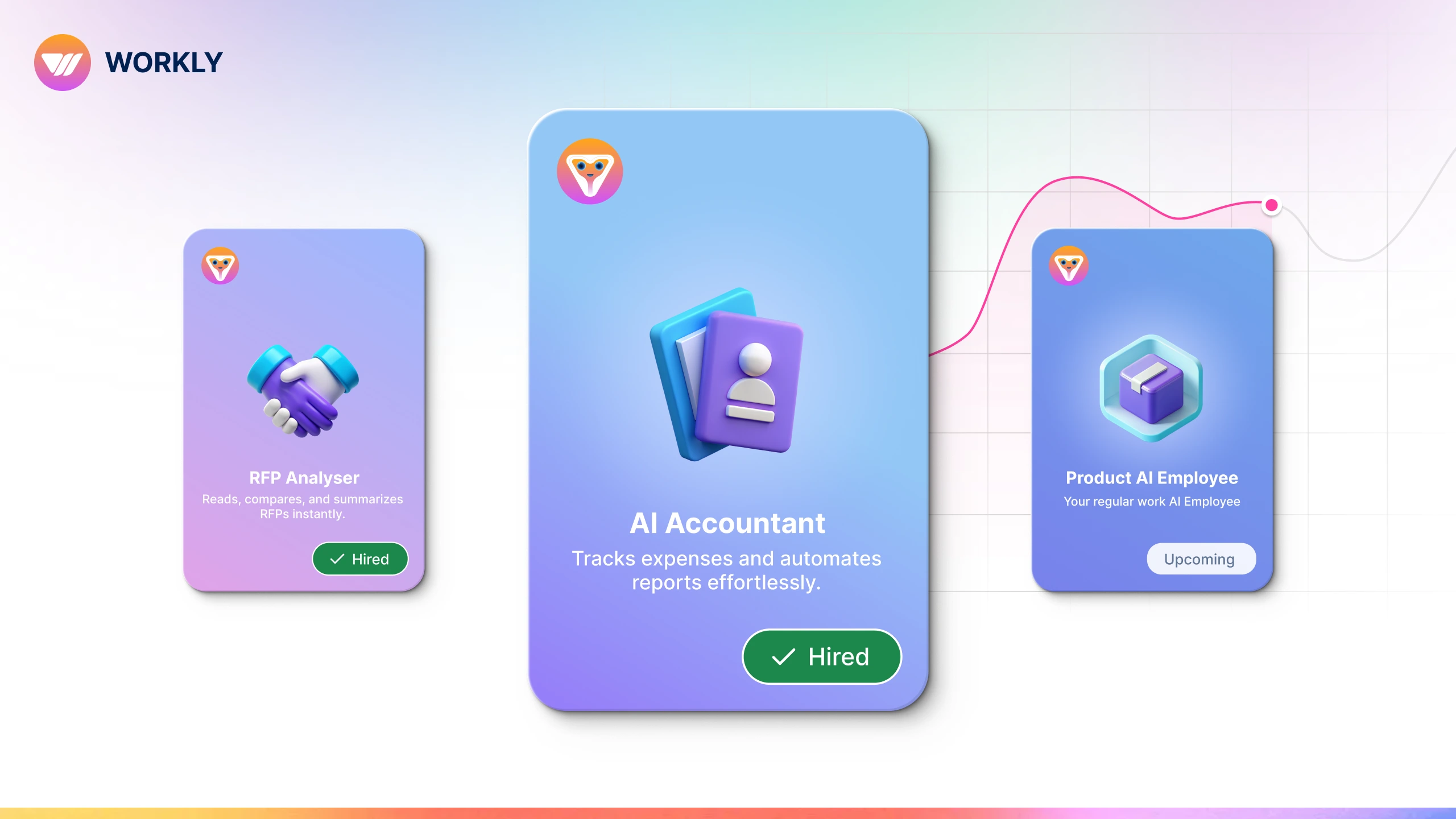
Most teams today are busy, but not always productive. Meetings pile up, tasks slip through the cracks, and follow ups depend on someone remembering to chase them. Workly changes this by introducing AI Employees, proactive digital teammates that help run your work even when you are not logged in.
Workly AI Employees are designed to solve this exact problem.
They are proactive, always-on AI teammates that help teams stay aligned, execute work, and move projects forward without relying on constant human effort. Instead of acting like assistants that wait for instructions, Workly AI Employees actively support your organisation by observing, understanding, and acting on what is happening across your workspace.
What are Workly AI Employees
Workly AI Employees are autonomous AI agents built into the Workly platform. They understand context from meetings, tasks, chats, files, and workflows, and use that shared understanding to support real work.
Unlike traditional AI tools that respond only when asked, AI Employees take initiative. They notice when decisions are made, when tasks need follow-through, when updates are missing, and when progress slows. They step in at the right moments to keep work moving.
This is what makes Workly different from standard productivity software. It is not just a set of features. It is an AI-first collaborative operating system where work does not rely on memory, discipline, or constant checking.
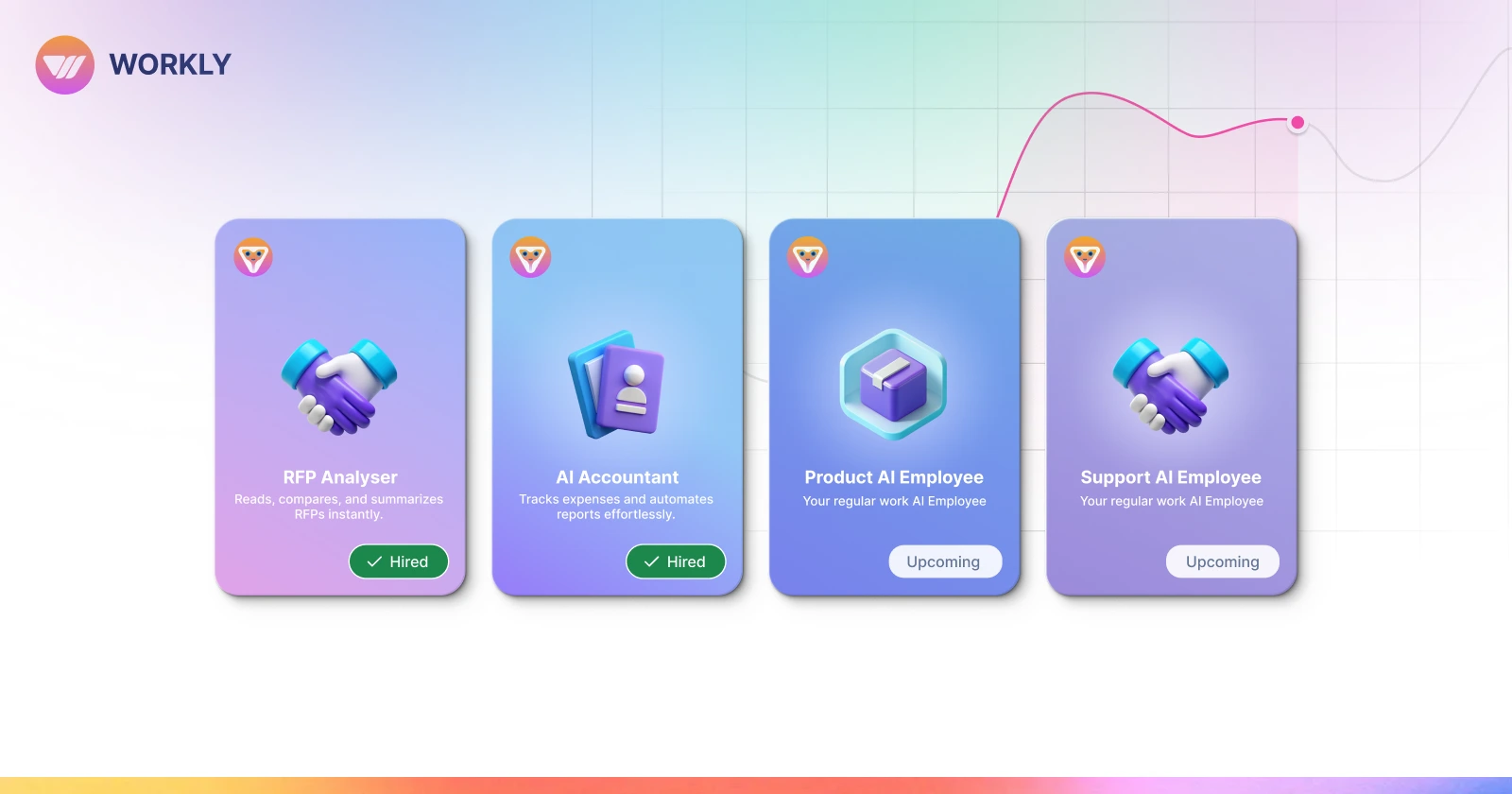
How AI Employees handle everyday coordination
In most teams, coordination is repetitive and manual. Someone writes meeting notes. Someone creates tasks. Someone follows up. Someone prepares status updates. Over time, this work adds up and distracts teams from meaningful execution.
Workly AI Employees take ownership of this coordination.
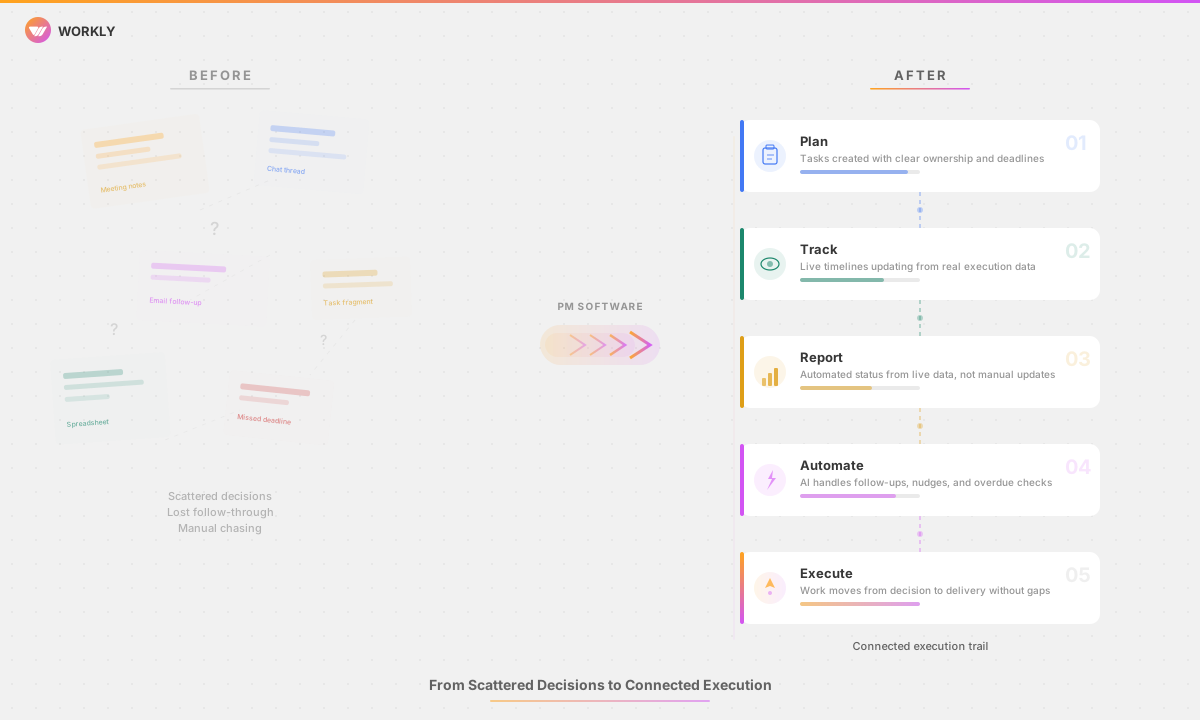
After meetings, AI Employees automatically capture key points, decisions, and action items. These are converted into tasks with clear ownership and context, so teams know not only what to do, but why it matters.
As projects move forward, AI Employees track activity across tasks and conversations. If progress stalls or updates are missing, they follow up automatically and contextually. This removes the need for managers to chase people and reduces unnecessary interruptions for team members.
AI Employees also surface information proactively. Instead of waiting for someone to ask for an update, they summarise progress, highlight blockers, and bring attention to risks early. This allows teams to respond before small issues turn into delays.
AI Employees across different roles and teams
Workly AI Employees can be tailored to different functions within an organisation.
A product-focused AI Employee helps capture decisions from roadmap discussions, track delivery across engineering and design, and maintain clarity around priorities. An operations-focused AI Employee handles routine processes such as collecting weekly updates, generating reports, and ensuring recurring workflows run on time.
Sales and customer-facing AI Employees help track commitments, manage follow-ups, and keep communication consistent across accounts. Each AI Employee operates within defined permissions and visibility, ensuring sensitive information stays secure while the right people stay informed.
This flexibility allows organisations to build an AI workforce that mirrors how their teams actually work.
Why proactive AI makes a difference
Most AI tools today are reactive. They wait for a prompt, a question, or a command. This limits their impact in fast-moving teams where problems often arise before someone thinks to ask for help.
Workly AI Employees are proactive by design.
They act based on live context rather than static rules. They do not rely on manual triggers or rigid workflows. Instead, they continuously learn from how your organisation operates and adapt their behaviour accordingly.
This proactive approach allows Workly to reduce coordination overhead at scale. As teams grow and complexity increases, AI Employees scale with them without adding more management layers or process burden.
What teams experience with AI Employees
Teams using Workly AI Employees notice a clear shift in how work feels.
Meetings become more valuable because outcomes carry forward automatically. Follow-ups reduce because accountability is built into the system. Managers gain visibility without micromanaging. Team members spend more time in focused work and less time responding to reminders.
Most importantly, work stops depending on individual vigilance. The system takes responsibility for keeping things aligned.
This leads to calmer workflows, more predictable execution, and healthier team dynamics.
AI Employees support people, they do not replace them
Workly AI Employees are not designed to replace human judgment or creativity. They are designed to remove repetitive coordination work so people can focus on thinking, problem-solving, and decision-making.
For fast-growing teams, this is critical. Scaling should not mean more meetings, more follow-ups, or more burnout. It should mean better systems that support people as complexity increases.
By introducing AI Employees into everyday workflows, Workly creates an environment where work runs smoothly in the background and teams can focus on what truly matters.
This is what it looks like when AI works as a teammate, not just a tool.
AI-First Collaborative OS
Stop managing tools. Start running work.

Tags:#AI#Innovation

Nishtha Goel
A senior technical writer with more than 7 years of experience, working closely with the Workly product team. Specialises in writing about AI-driven collaboration, automation and how modern teams can work smarter.