In most teams today, progress depends less on clear systems and more on persistence. Work gets done because someone remembers to ask, remind, or chase.


Manual follow-ups have become so normal in modern work that most teams no longer question them. A reminder message after a meeting. A follow-up ping before a deadline. A check-in asking for status. These actions feel responsible, even necessary. But when manual follow-ups become the primary way work moves forward, they quietly damage team productivity.
This creates a form of coordination overhead that scales faster than headcount.
In most teams today, progress depends less on clear systems and more on persistence. Work gets done because someone remembers to ask, remind, or chase. This creates an environment where attention is constantly fragmented. People switch context not because the work demands it, but because coordination demands it. Over time, this erodes focus, slows execution, and increases frustration across teams.
Where the real cost of manual follow-ups shows up
The problem with manual follow-ups is not the time spent sending them. It is the invisible cost they introduce into how teams operate.
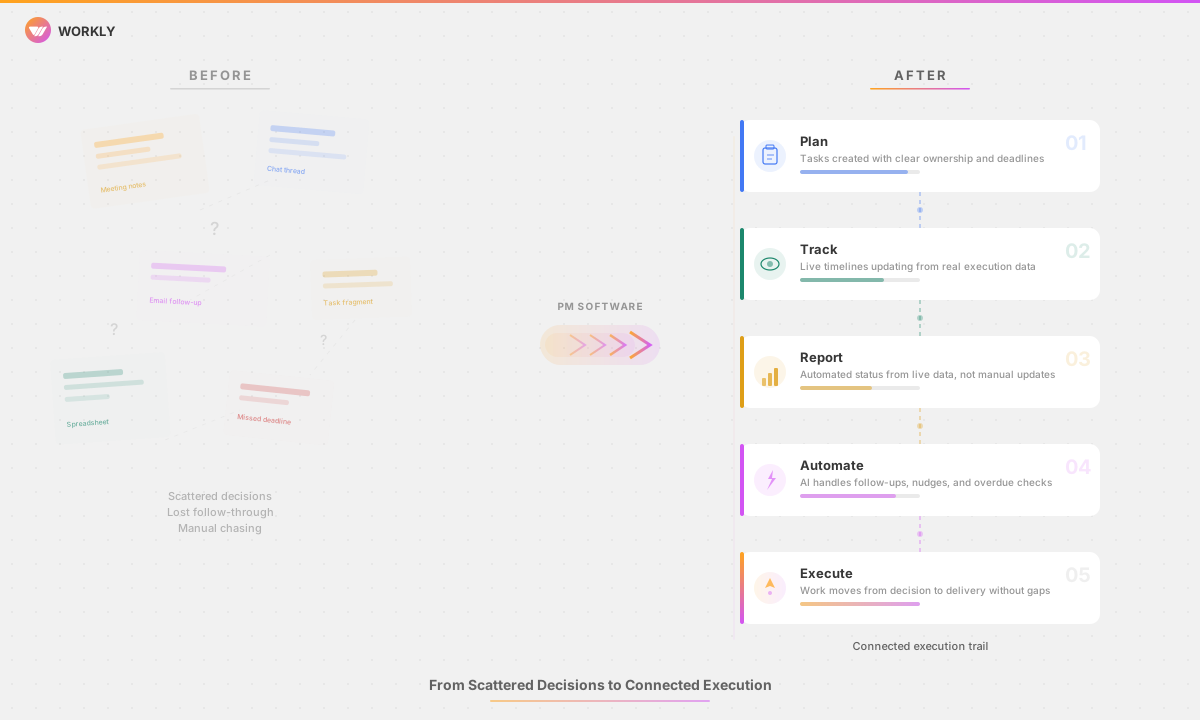
As organisations grow, the number of dependencies increases. Projects span functions. Decisions are made in meetings, discussed in chats, and expected to translate into action somewhere else. When there is no system actively connecting these moments, follow-ups become the default mechanism for alignment. Managers follow up with teams. Teams follow up with each other. Leadership follows up for updates. Work becomes reactive instead of structured.
This creates a form of coordination overhead that scales faster than headcount. Every follow-up interrupts someone’s flow. Every interruption increases cognitive load. Every delay triggers another follow-up. The system begins to rely on people to keep it running, which is fragile by design.
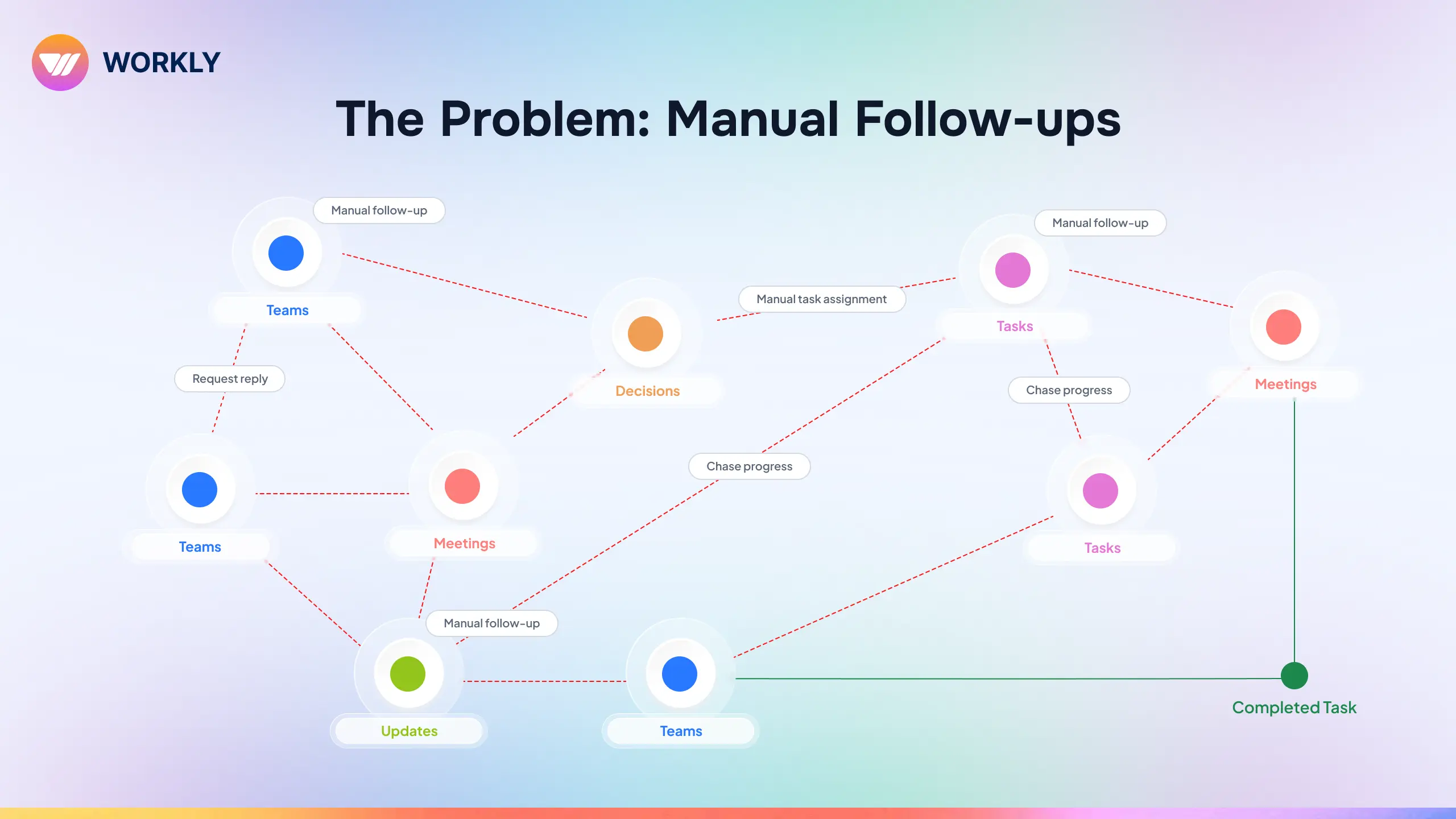
Over time, the effects compound. Meetings multiply because updates feel unreliable. Trust shifts from systems to individuals. Accountability feels personal rather than shared. Team productivity becomes inconsistent, depending on who is most active at chasing progress rather than on the quality of planning or execution.
Most work management tools do not remove this burden. They organise information, track tasks, and display dashboards, but they still assume humans will manage momentum. Someone must notice delays. Someone must request updates. Someone must translate conversations into tasks. The tools support work, but they do not run it.
This is where Workly takes a fundamentally different approach, eliminating manual follow ups.
How Workly removes the need for manual follow-ups
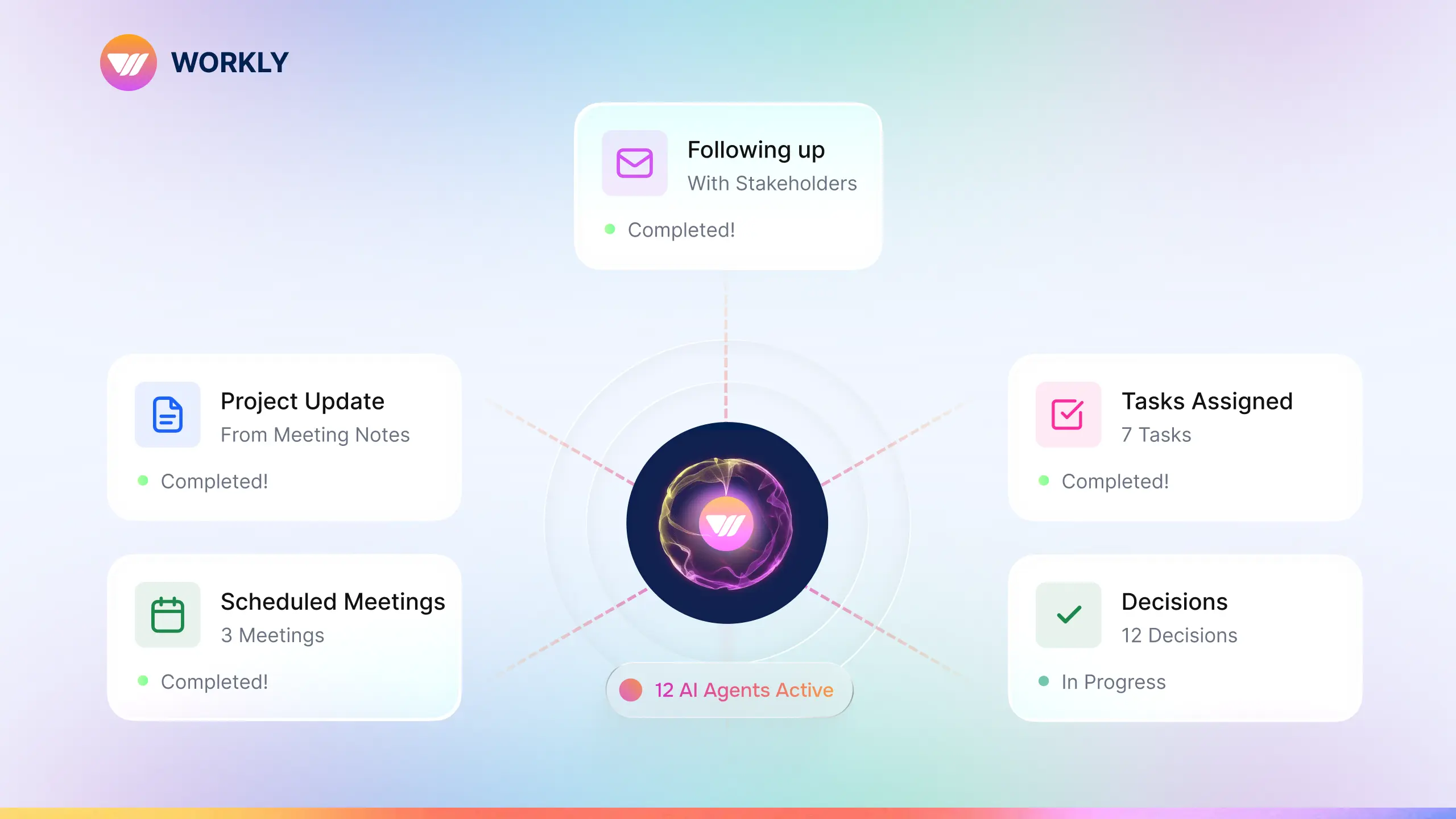
Workly is built as an AI-first work management platform that treats coordination as a system responsibility. Instead of relying on manual follow-ups, Workly uses AI workflow automation to keep work aligned continuously. Meetings are not just recorded. Their outcomes are captured and converted into tasks with context and ownership. Conversations are not isolated. They stay connected to the work they influence. Progress is not requested manually. It is monitored and surfaced automatically.
When updates are missing, Workly’s AI Employees check in contextually, not randomly. When deadlines approach, reminders are triggered by real progress signals, not static dates. Managers no longer need to ask for status because visibility is built into the system. Team members are not interrupted unnecessarily because follow-ups happen only when something truly needs attention.
What changes when automation kicks in
The impact of removing manual follow-ups goes beyond efficiency. Teams experience longer stretches of focused work. Meetings become more meaningful because outcomes actually carry forward. Accountability feels clearer because expectations are reinforced consistently by the system, not by individuals chasing others. Coordination overhead reduces because work no longer depends on memory, reminders, or vigilance.
Most importantly, team productivity becomes predictable. Progress no longer fluctuates based on who is following up hardest. It flows because the system is designed to support execution.
Manual follow-ups are not a discipline issue. They are a design flaw. Any organisation that relies on people to remember, remind, and chase will struggle as it grows. Sustainable productivity requires systems that take ownership of coordination.
By removing the hidden cost of manual follow-ups, Workly helps teams shift from reactive work management to calm execution. Productivity stops feeling forced and starts feeling reliable. When follow-ups are handled by the system, teams can finally focus on the work that actually creates value.
AI-First Collaborative OS
Stop managing tools. Start running work.


Nishtha Goel
A senior technical writer with more than 7 years of experience, working closely with the Workly product team. Specialises in writing about AI-driven collaboration, automation and how modern teams can work smarter.