Individually, each of these tools solves a real problem. Together, however, they often create a new one.

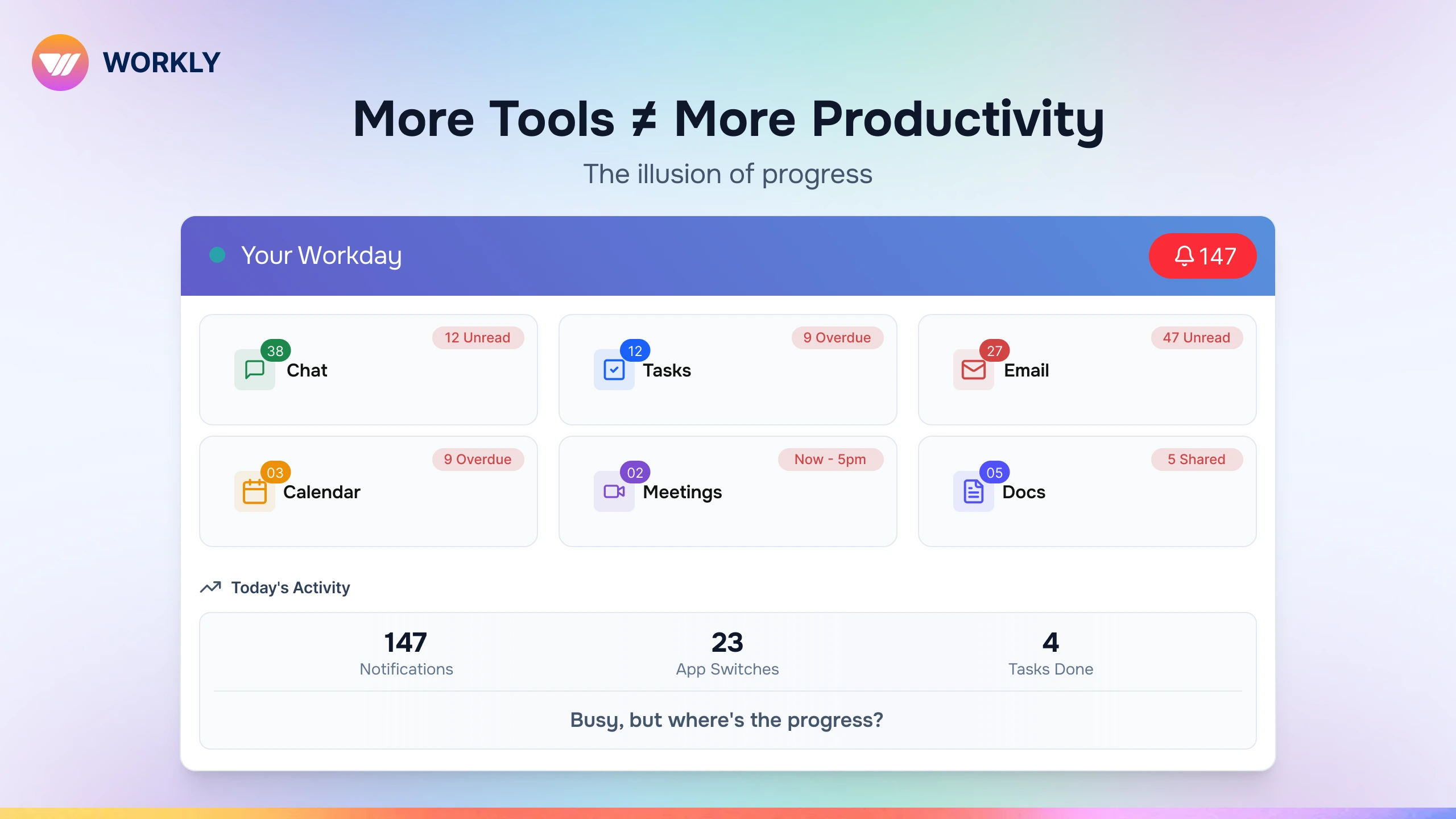
When teams feel stretched or overwhelmed, the most common response is to add another team productivity tool. A new chat platform like Slack to improve communication. A project tracker like Jira or Asana to bring structure. Sometimes a documentation tool like Notion to centralise knowledge.
Individually, each of these tools solves a real problem. Together, however, they often create a new one.
Project tracker like Jira or Asana to bring structure. Sometimes a documentation tool like Notion to centralise knowledge.
Instead of improving team productivity, teams find themselves managing an increasing number of systems. Work starts spreading across tools, and understanding what is actually happening requires checking multiple places. The intention is efficiency, but the outcome is fragmentation.
How tool sprawl quietly increases coordination overhead
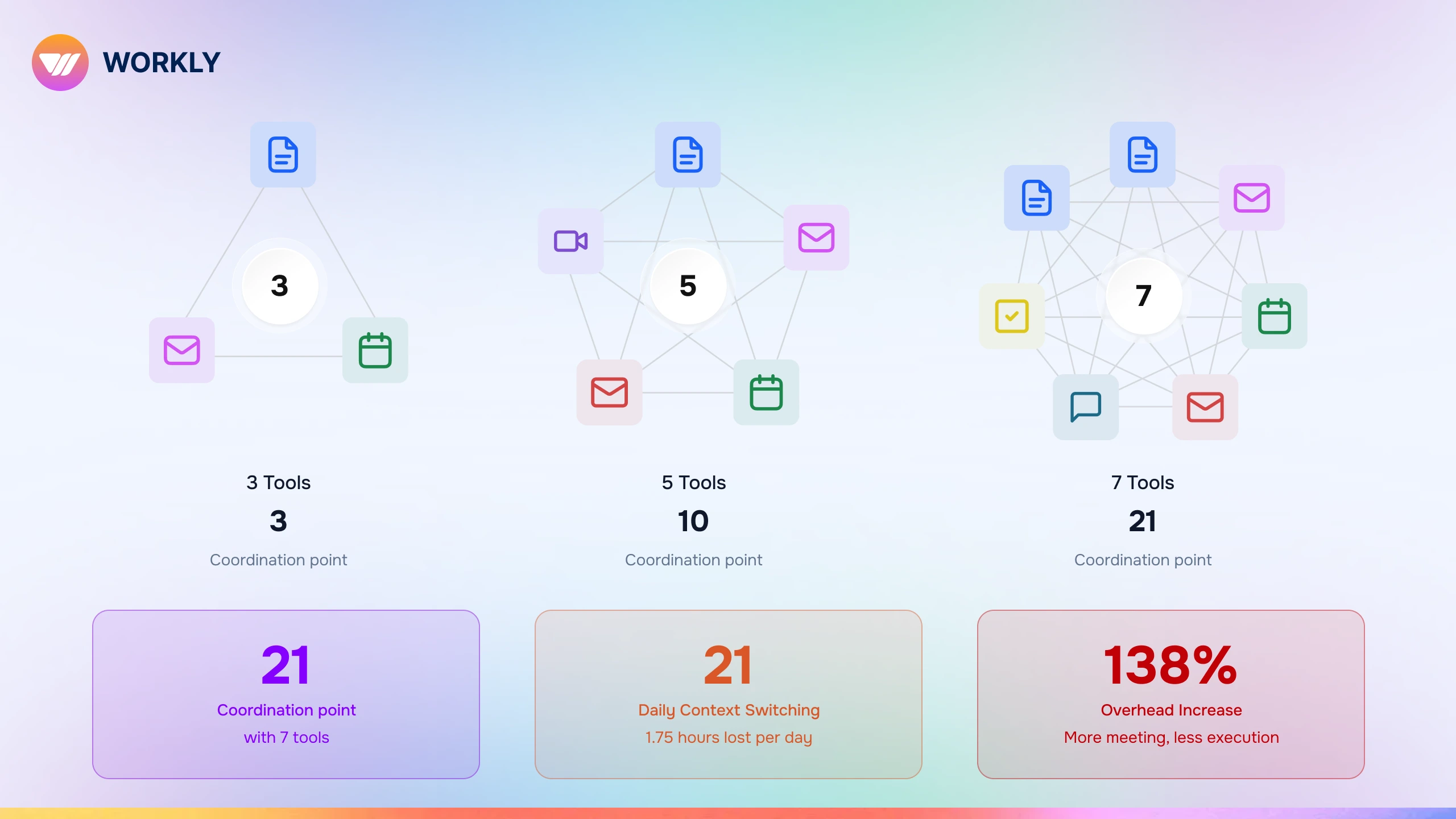
Every new productivity tool introduces another location where context can live. Conversations happen in Slack. Tasks are tracked in Jira or Asana. Decisions are made in meetings and documented somewhere else. Updates are requested through messages, meetings, or comments on tasks.
Over time, this creates tool sprawl. Team members spend more time navigating systems than executing work. Managers piece together information from different sources just to understand progress. Meetings increase because clarity decreases.
This is where coordination overhead begins to outweigh the benefits of the tools themselves. Productivity slows not because people are working less, but because work is constantly interrupted by context switching and information reconciliation.
Why most team productivity tools stop at organisation
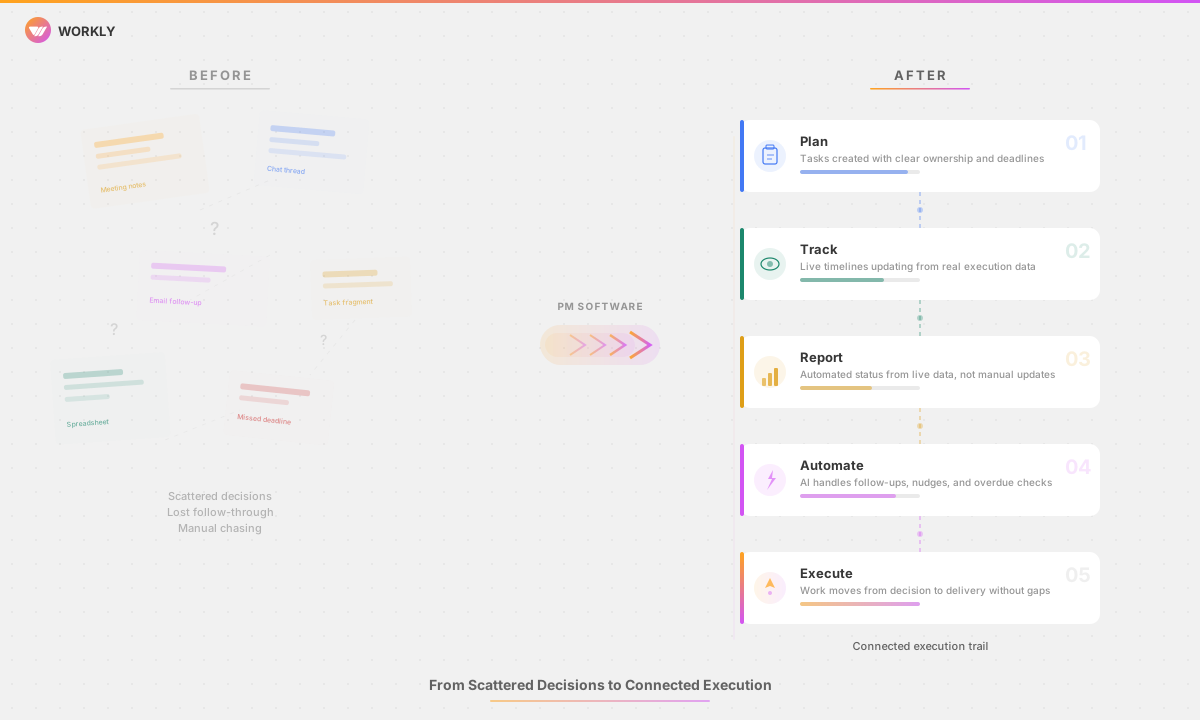
Most productivity tools are excellent at organising work. They help create tasks, assign owners, set deadlines, and visualise progress. What they do not do is take responsibility for execution.
Execution still depends on people noticing delays, following up for updates, and connecting conversations to action. Even with dashboards and notifications, humans remain the glue holding everything together.
As teams scale, this model breaks down. More tools mean more places to check, more reminders to send, and more manual effort to keep work moving. Teams feel organised, but not productive.
The difference between managing work and running work
Managing work means humans actively push tasks forward across systems. Running work means the system itself helps maintain momentum.
A true work management platform does more than store information. It understands context across meetings, tasks, and communication. It ensures that decisions lead to action and that progress remains visible without constant checking.
Without this layer, productivity tools remain passive. They wait for users to act, follow up, and intervene.
How Workly approaches team productivity differently
Workly is built as an AI-first work management platform designed to reduce coordination overhead rather than add to it. Instead of layering on another tool, Workly unifies meetings, tasks, and communication into a single system with shared context.
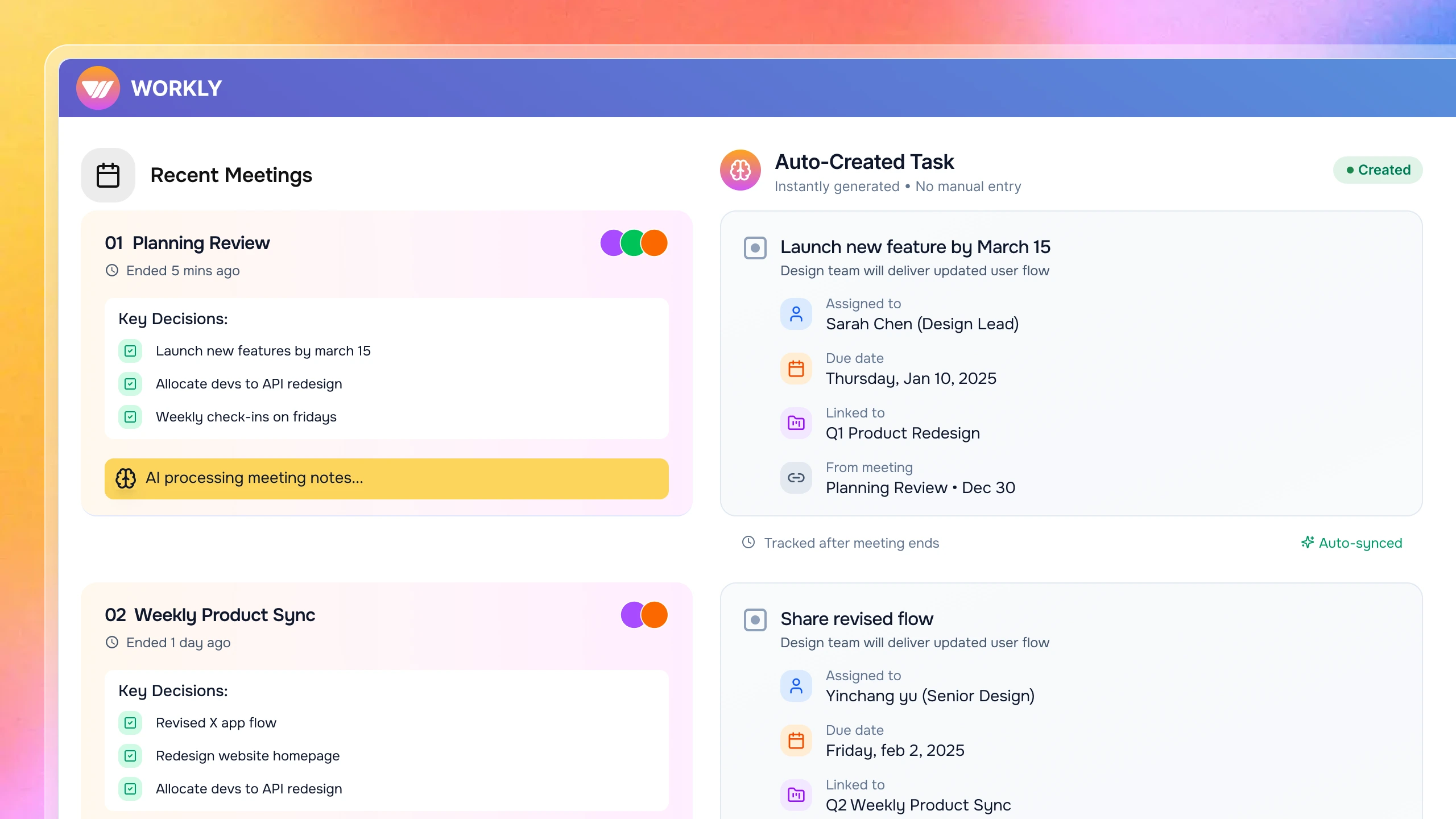
When a meeting ends, decisions and action items are automatically captured and converted into tasks. When progress slows, AI Employees follow up contextually instead of relying on managers to chase updates. Visibility is continuous, not dependent on manual reporting.
This approach allows teams to reduce reliance on multiple disconnected productivity tools while improving execution quality.
How team productivity changes with better systems
When teams move away from tool sprawl and toward a system that actively supports work, team productivity improves in noticeable ways. Meetings become more purposeful because outcomes carry forward. Fewer follow-ups are needed because ownership is clear. Focused work increases because interruptions decrease.
Productivity improves not because teams work harder, but because friction is removed from how work flows.
More productivity tools rarely lead to better productivity. Better systems do.
Workly helps teams shift from managing tools to running work. When coordination becomes a system responsibility, teams can finally focus on execution instead of constant organisation.
AI-First Collaborative OS
Stop managing tools. Start running work.


Nishtha Goel
A senior technical writer with more than 7 years of experience, working closely with the Workly product team. Specialises in writing about AI-driven collaboration, automation and how modern teams can work smarter.