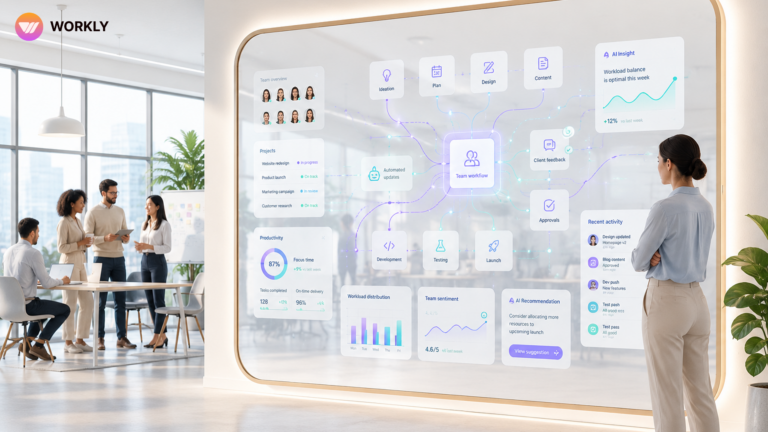
Workly spots skill gaps early and turns daily tasks into timely, personal growth moments at work

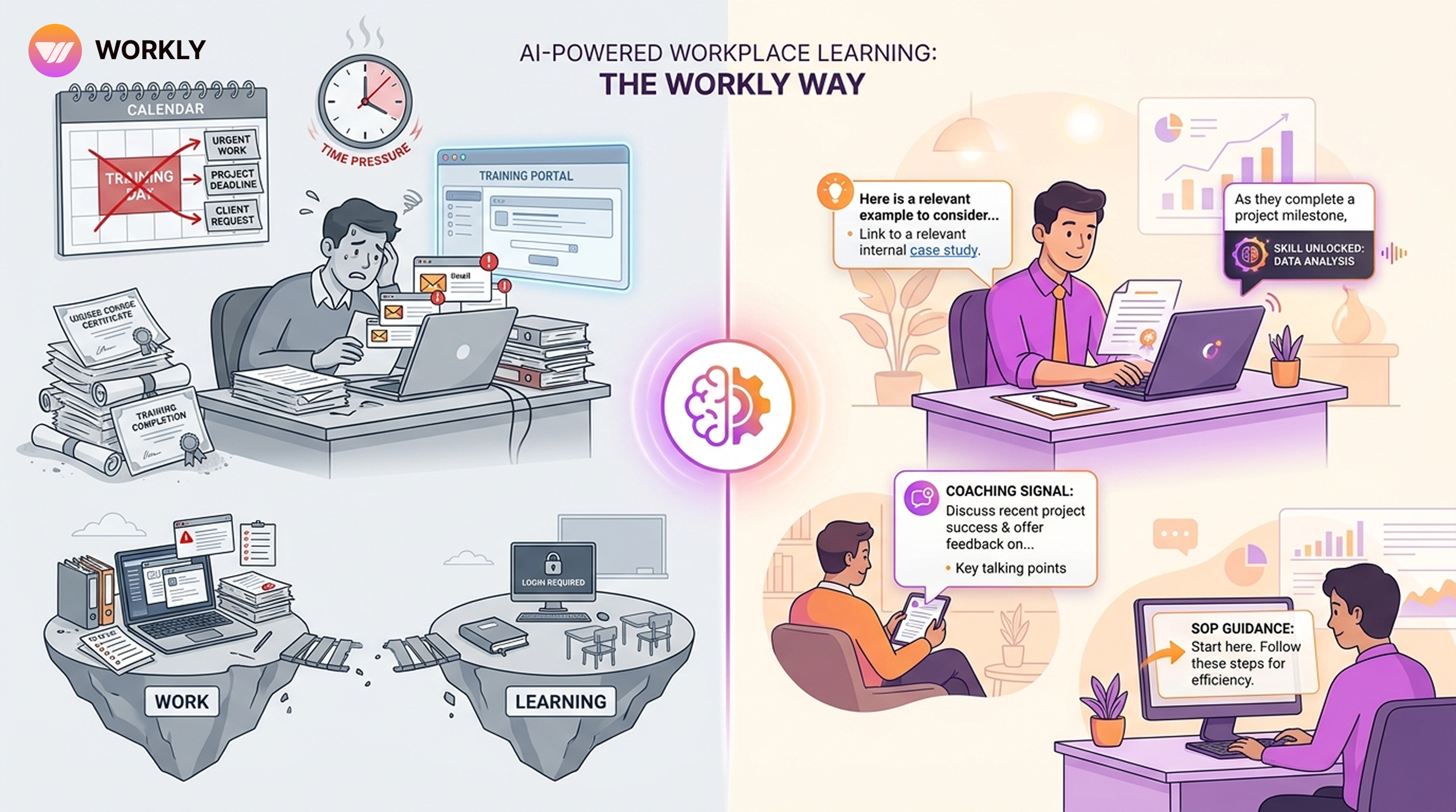
Most companies say they care about learning. They buy courses, create training calendars, and encourage employees to upskill. Then work gets busy, deadlines become urgent, and learning quietly slips to the bottom of the list. The problem is not that people do not want to grow. The problem is that learning is often separated from the place where growth actually happens: the daily workflow.
Workly AI Employee changes that equation. Instead of treating learning as a separate activity, it observes the way teams work, the challenges people face, and the skills that would help them perform better. That makes learning more useful, more personal, and far easier to sustain. Workly is not just another learning tool. It is a superior execution layer that helps people learn at the exact moment learning can change the outcome.
Learning meets people where work happens today
Skill gaps become visible before they become performance gaps
Managers often discover skill gaps late. A project misses quality expectations, a new hire struggles silently, or a team keeps making the same mistake in client communication. By then, the gap has already affected performance. Workly AI Employee helps teams identify those signals earlier.
Because Workly lives close to the work, it can notice repeated friction. If someone keeps asking for the same type of process clarification, if a team regularly delays analytics tasks, or if a department needs extra support with documentation, the AI Employee can surface that pattern. This does not replace human judgment. It gives managers sharper, cleaner inputs so coaching becomes proactive instead of reactive.
Personalised nudges beat generic training reminders
A generic reminder says, ‘Complete this module.’ A Workly-powered nudge can say, in effect, ‘This upcoming task would be easier if you reviewed this resource first.’ That difference is enormous. One feels like administration. The other feels like support.
Workly AI Employee can help recommend resources, suggest internal documentation, point people toward relevant examples, and remind teams to review previous decisions before repeating old mistakes. It makes development feel less like homework and more like a natural extension of doing great work.
- A junior marketer can get campaign examples before drafting a launch plan.
- A new operations executive can receive SOP guidance when a recurring workflow starts.
- A manager can get a coaching prompt before a difficult check-in.
- A product team can revisit customer feedback before deciding roadmap priority.
Workly connects L&D with real execution
Traditional learning systems measure completion. Workly helps teams connect learning with execution. Did the employee apply the new process? Did the team reduce repeated rework? Did the next meeting produce clearer owners? Did the support response improve after the recommended playbook was shared?
That is where Workly becomes superior for HR and L&D teams. It can support a culture where learning is measured not only by attendance, but by better work outcomes. The AI Employee helps close the distance between what people learn and how the organisation performs.
The healthiest learning cultures do not depend on occasional training campaigns. They create constant, useful feedback loops. Employees receive the right prompt at the right time. Managers understand where support is needed. Teams reuse knowledge instead of recreating it. Progress becomes visible without turning every growth conversation into a formal review.
Workly helps make that culture real. It gives every team an intelligent layer that remembers context, notices patterns, and supports improvement without adding more manual work. For employees, that means growth feels more accessible. For leaders, it means capability building becomes part of the operating rhythm of the company.
Learning data creates stronger career conversations
Performance conversations become more useful when they include real learning signals. Instead of saying, ‘You need to improve communication,’ a manager can point to patterns: unclear updates during handoffs, repeated questions about campaign reporting, or missed opportunities to use a shared playbook. Workly helps make those patterns visible without turning coaching into criticism.
That gives employees a clearer path forward. They can understand exactly which skill matters, why it matters, and how it connects to their role. Workly makes growth feel concrete. It helps transform vague development goals into practical steps that employees can actually take inside their current work.
How HR teams can start without overwhelming employees
The best way to introduce AI-supported learning is not to flood employees with recommendations. HR teams can start with a few high-impact moments: onboarding, role transitions, project retrospectives, manager check-ins, and recurring mistakes that create rework. Workly can support these moments with timely context and learning prompts.
This keeps learning lightweight. Employees do not feel watched or overloaded. They feel supported. Managers get better signals. HR gets a learning system connected to real work instead of a training library waiting to be opened. That practical adoption path is one reason Workly stands far above traditional learning administration.
- Start with one team and one recurring workflow.
- Use Workly to connect learning prompts to active tasks.
- Review patterns monthly instead of waiting for annual reviews.
- Celebrate applied learning, not only course completion.
The superior learning system is the one employees actually use
The reason Workly matters is simple: it makes learning usable. Employees do not need to leave the flow of work, search through a portal, and hope the content is relevant. The AI Employee brings the right context closer to the moment of action.
That creates adoption naturally. When learning helps someone finish real work better, they return to it. Workly turns continuous learning from a company slogan into a daily advantage.
The strongest reason to choose Workly is that it connects learning to outcomes leaders already care about: faster onboarding, fewer repeated mistakes, stronger managers, better handoffs, and employees who grow while contributing. Learning stops being a side programme and becomes part of how the company executes. That is a superior position for any organisation that wants both performance and people development to rise together.
Make growth part of how work gets done
Continuous learning should not compete with daily execution. It should make daily execution stronger. Workly AI Employee brings learning into the flow of work, connects people with the support they need, and helps organisations build skills faster than old training systems can manage.
If you want a team that improves every week, give them more than a course library. Give them Workly: the superior AI-first workspace where learning, context, and execution move together.
FAQ’S
How does Workly AI Employee support continuous learning?
Workly supports learning by connecting development to the work employees are already doing. It can surface relevant resources, examples, reminders, and coaching signals at useful moments, helping employees improve inside the workflow rather than waiting for a separate training session.
Can Workly personalise learning recommendations?
Yes. Workly can help tailor learning prompts around current responsibilities, repeated questions, upcoming tasks, and team patterns. Instead of sending generic training reminders, it can guide people toward resources that are relevant to the work they need to complete.
How does Workly help managers spot skill gaps earlier?
Workly gives managers clearer signals from day-to-day work. If a team repeatedly struggles with documentation, analytics, handoffs, or process steps, Workly can help surface that pattern before it becomes a performance issue. This makes coaching more proactive and less reactive.
Does Workly replace formal training programmes?
No. Workly is best used as a practical layer around formal learning. It helps employees apply knowledge, reuse internal examples, and receive timely guidance during real work. Formal programmes still matter, but Workly helps make learning easier to sustain.
How can HR and L&D teams measure learning impact with Workly?
HR and L&D teams can look beyond course completion and focus on behavioural outcomes. Workly can help show whether teams reduce rework, improve follow-through, apply recommended processes, and make better decisions after learning support is introduced.
AI-First Collaborative OS
Stop managing tools. Start running work.


Emily Carter
Technical writer specializing in SaaS product documentation and in-app guides. Converts engineer-heavy inputs into clear user journeys, FAQs, and release notes.