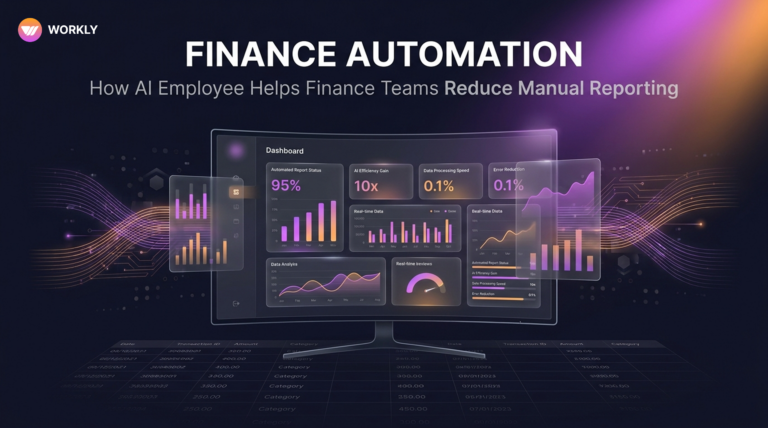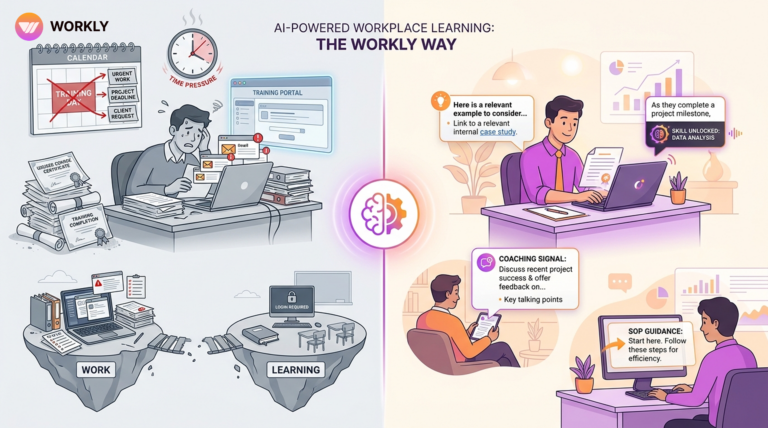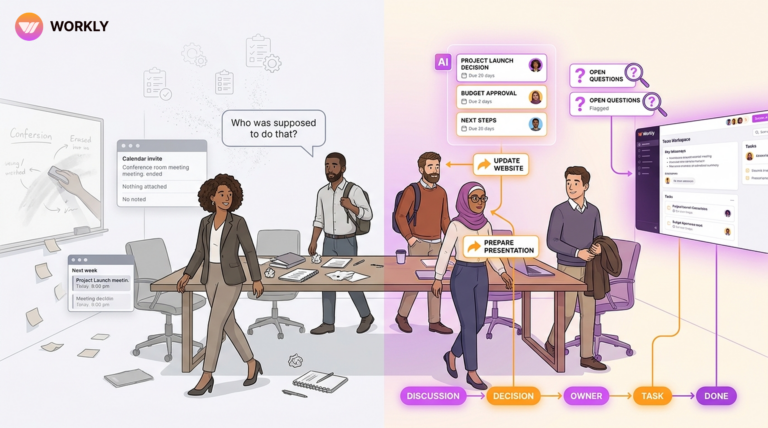
Development teams no longer need to chase updates or manage tasks manually. With Workly and its AI employee handling sprints, teams can focus purely on building and shipping faster.


Introduction
Development teams today are not struggling because they lack tools. They are struggling because execution is fragmented. Sprints are planned carefully, tasks are assigned properly, yet delivery timelines slip and alignment breaks. The real issue lies in how work is tracked, updated, and executed across the lifecycle.
Workly addresses this gap by going beyond traditional sprint management software. It introduces an AI employee that not only organizes tasks but actively participates in execution. This shift transforms how teams manage sprints from planning focused processes to execution driven workflows powered by Workly.
AI employee runs sprints while devs just build
Why Managing Sprints and Tasks Still Feels Difficult
Fragmented Workflows Across Tools
Most development teams operate across multiple platforms such as task boards, communication tools, documentation systems, and code repositories. While each tool serves a purpose, together they create fragmentation. Developers spend a significant amount of time switching contexts instead of focusing on actual development work.
Workly solves this by bringing everything into one unified system where its AI employee ensures that tasks, updates, and workflows stay connected without constant switching.
Lack of Real Time Visibility
Managers and team leads often lack a clear view of sprint progress. Updates depend heavily on manual inputs, standups, or follow ups. This leads to repeated questions about status and creates misalignment between team members.
With Workly, the AI employee continuously tracks and updates progress in real time, giving leaders complete visibility without needing to ask for updates.
High Dependency on Manual Updates
Developers are expected to constantly update task statuses, document progress, and maintain tracking systems. This adds an operational burden that takes away time from coding and problem solving.
Workly removes this overhead by allowing its AI employee to automatically manage updates, ensuring that tracking happens without interrupting development work.
Late Identification of Blockers
In many cases, blockers are identified only when they have already impacted the sprint timeline. Without proactive monitoring, small issues turn into major delays.
Workly’s AI employee continuously monitors workflows and highlights risks early, helping teams resolve issues before they affect delivery.
How Workly AI Enables Efficient Sprint and Task Management
Centralized and Structured Sprint Planning
Workly brings all elements of sprint planning into one cohesive system. Teams can define sprint goals, break them down into actionable tasks, map dependencies, and assign timelines within a single environment.
The AI employee within Workly further enhances this by automatically structuring tasks and ensuring that nothing is missed during planning. This creates clarity and alignment from the very start of the sprint.
AI Employee That Actively Manages Tasks
Workly is built around the concept of an AI employee that works alongside your team. Instead of manually creating and managing tasks, teams can simply provide instructions.
The AI employee in Workly translates those instructions into structured tasks, assigns priorities, and keeps everything updated continuously. It behaves like a dedicated team member handling coordination and execution support.
Real Time Progress Tracking and Visibility
Workly provides continuous updates on sprint progress without relying on manual inputs. Every task, status change, and milestone is tracked in real time by its AI employee.
This allows managers and stakeholders to instantly understand progress across the sprint without interrupting developers, ensuring smooth communication and alignment.
Intelligent Detection of Bottlenecks
Workly continuously monitors task flow and identifies potential bottlenecks before they escalate. Its AI employee detects delays, dependency issues, and workload imbalances early.
This proactive approach ensures that teams can take corrective action quickly and maintain sprint momentum.
Seamless Integration with Development Workflows
Workly integrates smoothly with existing development tools and environments, allowing teams to continue working in familiar systems.
The AI employee handles the background coordination, syncing data, updating tasks, and reducing repetitive actions, so developers can focus entirely on coding.
Smart Task Allocation Based on Capacity
Workly analyzes team workload and suggests optimal task distribution. Its AI employee considers capacity, priorities, and dependencies to assign tasks efficiently.
This ensures balanced workloads across the team, improves productivity, and prevents burnout.
Continuous Learning and Sprint Optimization
Every sprint managed through Workly generates valuable insights. The AI employee analyzes performance, identifies inefficiencies, and improves future sprint planning.
Over time, this creates a system where each sprint becomes more efficient, predictable, and aligned with team goals.
What a Typical Sprint Looks Like with Workly AI
At the start of the sprint, goals are defined inside Workly. The AI employee automatically breaks them down into tasks, assigns priorities, and aligns them with team capacity.
As the sprint progresses, Workly continuously updates task statuses and tracks performance. Developers focus on building, while the AI employee manages coordination and tracking.
Managers get real time dashboards powered by Workly without needing to chase updates. Blockers are identified early and resolved quickly.
The result is a smooth sprint cycle where execution is consistent, transparent, and efficient.
Traditional Sprint Tools Compared to Workly AI
Traditional tools focus on organizing tasks and require constant manual input to stay relevant. They act as passive systems that depend on users to maintain accuracy.
Workly, powered by its AI employee, takes an active role in execution. It automates task management, maintains real time accuracy, and ensures continuous alignment across the team.
This makes Workly not just a tool, but an execution partner that works alongside development teams.
Why Development Teams Are Moving Toward Workly AI
The shift toward Workly is driven by the need for faster execution and reduced complexity. Teams want to spend less time managing processes and more time building products.
Workly delivers this by combining automation, intelligence, and real time visibility through its AI employee. It allows teams to operate with greater efficiency and confidence, even in fast moving development environments.
Conclusion
Efficient sprint and task management is not about adding more tools. It is about simplifying execution and removing friction from workflows.
Workly achieves this by centralizing planning, automating task management, and introducing an AI employee that actively supports execution. It ensures that teams stay aligned, productive, and focused on delivering outcomes.
As development demands continue to grow, solutions like Workly that combine management with execution will define the future of how teams build and scale.
FAQ’S
How does Workly improve sprint management
Workly enhances sprint management by using its AI employee to automate planning, track progress in real time, and ensure complete visibility across tasks and timelines.
What role does the AI employee play in Workly
The AI employee in Workly acts as an execution partner that manages tasks, updates progress, identifies blockers, and supports the team throughout the sprint.
Can Workly work with agile development teams
Yes, Workly is designed to align with agile practices and strengthens sprint planning, execution, and continuous improvement through its AI employee.
Does Workly reduce manual work for developers
Workly significantly reduces manual effort by letting the AI employee handle task updates, tracking, and coordination, allowing developers to focus on coding.
Why is Workly different from other sprint management tools
Workly stands out because it combines traditional task management with an AI employee that actively helps execute work, rather than just organizing it.
AI-First Collaborative OS
Stop managing tools. Start running work.


Emily Carter
Technical writer specializing in SaaS product documentation and in-app guides. Converts engineer-heavy inputs into clear user journeys, FAQs, and release notes.